
1. Background
Considering the high birth rate in the general population and the incidence of irreparable consequences, such as neonatal death and persistent neurological injuries and complications due to the infant's lack of timely breath and inability to adapt to extra-uterine life, taking quick and timely measures within the framework of various stages of neonatal resuscitation is essential. Given the frequent need for neonatal resuscitation at birth, the presence of assistants trained in neonatal resuscitation is necessary (1). Training should aim to increase awareness, enhance skills, and improve human resource performance. To achieve this goal, appropriate methods should be considered in educational planning, as effective teaching and learning methods are directly correlated. Awareness of recent changes highlights the necessity of making changes in resuscitation training (2). Unfortunately, the theoretical and practical training of CPR has not been well-defined in the curriculum of medical departments, leading to graduates with varying levels of knowledge and skills based on their interests and the relevant faculty (3). Rehabilitation training should be based on facts, skills, and attitudes, using appropriate teaching methods and aids. According to global standards in medical education, using different training methods, including training and evaluation, as well as emphasizing clinical and communication skills, is effective in improving training (4).
In recent years, researchers have emphasized motivating learners to self-learn because this learning style leads to better retention of the subject matter in the learner's mind, resulting in more effective learning (5). Multimedia learning involves using assisted pictures, films, audio, and other forms of media. Multimedia methods can complement conventional teaching methods (6). Training through multimedia is a student-oriented method, encouraging learners to actively engage in learning and take responsibility for their own education (7).
Multimedia-based training addresses the needs of today's society, where it is nearly impossible to train all individuals in the same class, at the same time, and via the same method, in a way that ensures learning for everyone (8). Recent studies indicate a growing trend in using educational media communications and technology in teaching. Media, including films, videos, and images, can convey a lot of information in a short time and facilitate the learning process. However, more studies are needed to determine their effectiveness (9). Gathering and analyzing data about multimedia education can help design more effective multimedia instructional programs (10).
2. Objectives
Given the development of modern learning methods and the necessity of improving functional skills in the neonatal resuscitation process the current research aimed to assess the learning experiences of medical interns regarding neonatal resuscitation training using the multimedia method.
3. Methods
This study was a qualitative conventional content analysis conducted on 17 general medicine interns in their last semester in the Department of Pediatrics at Alborz University of Medical Sciences. Sampling was done by convenience methods. Among the students who were on duty in the departments related to newborns, those willing to participate in the practical resuscitation training class were invited to the study. After explaining the objectives and obtaining informed consent, participants joined a practical training workshop using multimedia aids and practical training on moulage.
Initially, 20 interns from the last year were invited to participate, but two were excluded because they did not participate in the feedback discussion (focus group). The educational method was a hands-on workshop for newborn resuscitation using conventional educational methods on medical moulages, followed by practice in various hypothetical resuscitation scenarios. A camera connected to a television recorded all procedures. The recorded films were shown to the students, allowing them to see the details of their performance.
Data collection was conducted through a focus group, emphasizing interaction among the research participants. The focus group questions were developed based on previous studies, available resources, and the researcher’s experience. The group discussion began with a general question about the quality of multimedia education with a workshop and recorded film in newborn resuscitation, followed by other questions directed by the participants and the moderator.
The main questions were: "What were your thoughts and experiences from this workshop and recorded film?" "Was this workshop and recorded film method effective for you in better learning and understanding the neonatal resuscitation process?" "What are the strengths and weaknesses of this training method, in your opinion?" These questions were designed and directed using probing questions and prompts, such as "can you explain more?" and "what do you mean?"
After the multimedia training session, four focus group discussion sessions were held. Due to the limited time students could spend in the pediatric departments, only one focus group session was held for each group. Students were divided into four groups of four individuals and one group of five individuals. Each meeting lasted for four hours, moderated by a facilitator who explained the goals to the students and guided the discussion towards the study's objectives.
Note-taking during the interviews was performed to help perceive and analyze the themes. Anonymous demographic information was collected for all participants. The sessions were recorded using an iPhone mobile version X. The recorded interviews were listened to once, transcribed word for word immediately, and the content was frequently reviewed. Data analysis followed the content analysis method, where the information was coded, and similar codes were classified into specific categories, from which themes were extracted.
All interviews were transcribed, and codes, categories, and themes were generated through content analysis. These were validated by reviewing the written interviews with the participants again and correcting any contradictions.
In the focus group meeting, all students participated, and the discussion continued until saturation was reached. To ensure trustworthiness, a member check was conducted with several students after writing the initial codes. The resuscitation process was explained and practiced in full detail according to international standards by the neonatologists, which can help with the transferability of the findings.
4. Results
A total of 17 general medicine interns from the last semester, admitted in 2015, participated in the present study.
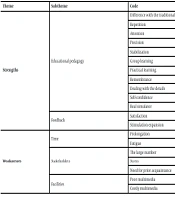
Concerning the study objective, "neonatal resuscitation using the multimedia method" was evaluated and explained based on the experiences of medical interns. In general, the obtained results were categorized into two themes: Strengths, which included the subthemes of educational pedagogy and feedback, and weaknesses, which included the subthemes of time, stakeholders, and facilities (Table 1).
Table 1.
Themes and Subthemes Extracted from the Interviews
| Theme | Subtheme | Code |
|---|---|---|
| Strengths | Educational pedagogy | Difference with the traditional method |
| Repetition | ||
| Attention | ||
| Precision | ||
| Stabilization | ||
| Group learning | ||
| Practical learning | ||
| Remembrance | ||
| Dealing with the details | ||
| Self-confidence | ||
| Real simulator | ||
| Feedback | Satisfaction | |
| Stimulation expansion | ||
| Weaknesses | Time | Prolongation |
| Fatigue | ||
| Stakeholders | The large number | |
| Stress | ||
| Need for prior acquaintance | ||
| Facilities | Poor multimedia | |
| Costly multimedia |
4.1. Educational Strengths Theme
The educational strengths theme consisted of two subthemes: Educational pedagogy and feedback.
4.1.1. Educational Pedagogy
In the educational pedagogy subtheme, interns identified 11 codes: Differences from the traditional method, repetition, attention, precision, stabilization, group learning, practical learning, remembrance, dealing with details, self-confidence, and real simulation.
4.1.1.1. Difference with the Traditional Method
According to the interns in this study, they gained a new understanding of neonatal resuscitation:
“It was very different. We have never received such correct training during these years.” (Participant 1)
4.1.1.2. Repetition
One of the strengths pointed out by the interns was the repetition of the procedure.
“Our evaluation has always been this way: We studied something theoretically and finally watched its video on YouTube; then, we came, and they expected us to do something practical, whereas we had not seen these procedures at all. But here, you are evaluated on what you were trained in at that time, which will also be repeated for you, and then you will come and be evaluated again. I think it is an excellent idea.” (Participant 1)
“It is repeated for other individuals because what one watches in the film is a bit different from what they perform themselves...” (Participant 10)
4.1.1.3. Attention
Another strength of the multimedia method was the attention to the procedure.
“Well, it was both good and bad that you knew this was not an exam and you were going to learn from it; you pay more attention to what you have at hand.” (Participant 1)
4.1.1.4. Precision
Precision in performing the procedure was another strength of training using the multimedia method.
“I did not remember what I had done on some occasions, and then I said, for example, 'oh, I have done this.' Some actions might not happen to me, but I saw them with other interns. They had performed certain actions by chance, and when they watched the film, they understood the correct way to do it. For example, they watched the exam’s answer, which was the pulse oximeter on the right hand. I had done it on the right hand, but understanding the reason was no longer by chance. We know the reason now, or if a person does not remember some steps or does not pay attention, like how they used the bag valve mask, in the film, they watch it again, pay attention, and therefore, it stays in their mind.” (Participant 5)
4.1.1.5. Stabilization
Persistence in the mind and learning stabilization were other strengths of the multimedia method.
“It may take a bit longer, but I think it is simultaneously both training and evaluation, and it becomes stabilized in one’s mind.” (Participant 1)
4.1.1.6. Group Learning
Another strength of the study was the implementation of the multimedia method in a group setting.
“Then, this is a group activity that one can do with their friends.” (Participant 1)
“It is good for evaluation, but only if it is truly the same as, for example, group-by-group training; if the training is theoretical, such an evaluation will be very difficult.” (Participant 14)
4.1.1.7. Practical Learning
According to the participants, the practical implementation of the method had the greatest impact on learning.
“We became familiar with different stories and scenarios practically. We went to the room; there was a scenario for each student. I watched the films, and we got acquainted with different scenarios. Then, we also watched ourselves, meaning we appeared as examiners. After that, it completely shifted from the theoretical method to a more practical one. Those subtle points that a person cannot understand in a theory course and must observe practically were quite obvious. I might have made a very big mistake, but, for example, my friend might have made a small mistake that seemed very big in practice.” (Participant 10)
4.1.1.8. Remembrance
Many participants suggested that the multimedia method was the best for aiding remembrance.
“I think it is mostly kept in my mind... I feel that I completely know the content now. In my opinion, its best benefit is that the content is kept in our minds completely.” (Participant 2)
“Performing a procedure practically helps us remember it. I have read and memorized this resuscitation table several times since my internship, but I did not remember it. Now, if I do it, I think I will really remember how to do it.” (Participant 15)
4.1.1.9. Dealing with the Details
Performing all the components of the procedure was another strength highlighted in this study.
“We never learn many of the details that had to be performed in this process. We did not read them, or if we did, we paid no attention to them. But when it was performed practically and played several times in front of our eyes, those details were kept in our minds forever.” (Participant 3)
4.1.1.10. Self-confidence
The participants' increased self-confidence was among the study's strengths.
“I feel self-confident about what I did.” (Participant 4)
4.1.1.11. Real Simulator
Many participants compared this method to working with a real patient and felt positive about performing the procedure.
“It was nice; it was somehow like a reality simulator where I might be in that condition. That is why it was not boring. It was indeed a situation where one says to themselves, ‘I may be in such a condition, so I must perform at the highest level.’” (Participant 5)
4.1.2. Feedback
The feedback subtheme consisted of satisfaction and simulation expansion.
4.1.2.1. Satisfaction
Having a positive feeling and satisfaction were other strengths of this training method.
“I think it was the best part because we understood exactly the main points and our faults. Also, it was very friendly; it did not offend us that we were doing something wrong.” (Participant 8)
“Everyone expressed their opinions openly; the professor was also very tolerant. It was a friendly atmosphere. Even though I had a fault, I laughed at myself. I mean, if someone else laughed at me, I was not offended at all.” (Participant 9)
4.1.2.2. Simulation Expansion
The need for continuity and training through multimedia was among the suggestions provided by the participants in their feedback on the training method.
“Perhaps the only thing... of course, they had provided some explanations previously, when I was absent; well, those explanations they had previously provided to the interns were good. I think the only point is to continue it, for example, to do similar things with adults so that it is repeated for us. It is not enough to do it once; we should do it more...” (Participant 4)
4.2. Weaknesses Theme
The weaknesses theme consisted of three subthemes: Time, stakeholders, and facilities.
4.2.1. Time
Under the time subtheme, the interns noted prolongation and fatigue.
4.2.1.1. Prolongation
The prolongation of the training method was identified as one of its weaknesses.
“Well, regarding its weaknesses, the most important is that it takes a long time. Each person comes and performs, and their film is reviewed again; its duration was actually much longer than other training methods. I see no other weaknesses in it.” (Participant 6)
4.2.1.2. Fatigue
Another weakness identified during the procedure was fatigue. Performing the procedure at an appropriate time, after the students had rested, was among the suggestions provided.
“Although we are on duty and very tired, our participation was a very good decision.” (Participant 3)
“We got really tired at the end; fatigue also lowers our capability. Its weaknesses were prolongation and that it made us tired.” (Participant 5)
4.2.2. Stakeholders
In the stakeholders' subtheme, the participants highlighted human factors interfering with the procedure and identified three subthemes: The large number of participants, stress, and the need for prior acquaintance.
4.2.2.1. The Large Number
“I think we should have been divided into more groups with fewer people in each.” (Participant 5)
“I think this limited number is better; it should not be more than this.” (Participant 14)
4.2.2.2. Stress
“I do not like the evaluation in this way because it causes a kind of stress due to the presence of the camera. My stress was because of the camera being there.” (Participant 2)
“I was so stressed. I answered many things incorrectly at that time. Now, I laugh at myself and think, ‘Why did I say it incorrectly there?’ It also felt like an exam because of the camera.” (Participant 12)
4.2.2.3. The Need for Prior Acquaintance
“My suggestion is that, if possible, a brochure should be prepared before each workshop so that the students can become acquainted with the main points...” (Participant 8)
4.2.3. Facilities
In the facilities subtheme, the interns identified two issues: Poor multimedia and costly multimedia.
4.2.3.1. Poor Multimedia
“It needs a base and hardware facilities, and, well, in Iran, unfortunately, maybe it is too much... This method may have been implemented in Europe, but their internet speed is very different from ours.” (Participant 12)
“The systems should be completely functional and have no problems.” (Participant 15)
4.2.3.2. Costly Multimedia
“It is costly and very time-consuming, and that is its problem.” (Participant 4)
“It is costly. Well... the camera was actually used; a team had come to film; it is expensive...” (Participant 17)
5. Discussion
In the educational pedagogy subtheme, the participants mentioned several strengths of this method, including novelty and difference from the traditional method, repetition, precision, attention, stabilization, group and practical learning, remembrance, attention to detail, self-confidence, and realistic simulation. This finding is consistent with the results of Omidifar et al.’s study, which indicated that the workshop had more favorable educational efficiency compared to participation in the official program (8).
The results of Sok et al.’s study demonstrated that CPR training using the simulation method at the clinical skills center positively affected nurses’ clinical knowledge and skills in CPR. Modern training methods indeed lead to better, deeper, and more persistent learning (9). In the present study, the participants experienced deeper practical and group learning by being present in a reality-simulated environment.
Providing the training course content by transmitting audio, video, and text, while benefiting from professor-learner mutual communication, maximizes the quality of the training course. Hence, the results of the current research are consistent with the results of Alijanpour et al.’s study, which combined practical training and modern methods, including the multimedia method, facilitating students’ acquisition of more skills (11).
Azadi et al.'s study, which involved holding a CPR workshop and filming the practical performance on a moulage, indicated that participants’ mean self-confidence scores increased after the intervention and remained high for eight weeks afterward. Meanwhile, knowledge levels were high immediately after the intervention but reduced eight weeks later (12). In the present research, learners reported experiencing higher levels of self-confidence with this method compared to traditional methods.
In the feedback subtheme, participants mentioned items such as satisfaction and simulation expansion.
In Tait et al.’s study investigating the combined method along with simulation methods on pharmacy students, participants implemented clinical scenarios using three simulation methods combined with feedback. Quantitative and qualitative opinions were then gathered, and participants reported similar levels of satisfaction with all three simulation methods. This aligns with the results of the present study, where combining feedback and simulation led to a sense of satisfaction among individuals. It is important to consider the feedback method and its implementation after the simulation method when designing any simulation-based scenario (13).
The results of Jafarnejad et al.’s research on 157 pediatric assistants, emergency room staff, and nurses indicated participants’ satisfaction with resuscitation workshops held using simulation techniques. The implementation of this training method seems effective not only in neonatal resuscitation but also in adult CPR. In the present study, participants suggested using this method for other clinical procedures (14).
In the time subtheme, participants noted procedure prolongation and fatigue.
By investigating the impact of virtual teaching-based training, Dai et al. found that the two factors of simulated scenarios and training programs with a longer duration play a crucial role in proper educational actions. However, in the present study, the longer duration was regarded as one of the method’s weaknesses from the participants’ perspective (15).
McCormick et al. examined four scheduling patterns on surgical residents and showed considerable potential for creating fatigue disorder due to the work schedule, which could be mitigated via certain countermeasures. In this study, participants also mentioned that schedule planning and synchronicity with work shifts created a feeling of fatigue (16).
In the stakeholders' subtheme, participants referred to items such as the large number of participants, stress, and the need for prior acquaintance.
In Jafaraghaie et al.’s study, students watched a CD containing the electronic content of each session, studied the book contents, and attended the classroom prepared before starting the class. The valuable class time was then spent on active learning activities, such as individual exercises, practices in small groups, and case studies and discussions. This flipped approach guarantees the learner’s active engagement in the classroom, ensuring they are not passive recipients of the content as in a traditional lecture (17). In the current research, before implementing the intervention, the curriculum development objectives were explained by the neonatal professors during a session.
To better understand psychological safety in simulation training, the evidence related to obstacles to psychological safety should be assessed. Park and Kim’s study, which explained nursing students’ experiences regarding psychological safety in simulation training using a qualitative method, highlighted the need for continuous improvement of faculty members' awareness of psychological risks and clinical scenario design and evaluation to create an appropriate learning environment that ensures psychological safety (18).
In Sohrabi et al.’s study, CPR training using the stabilization method resulted in reduced stress for learners. This method involved lectures and practical performance on mannequins at both basic and advanced levels. The educational package also included pamphlets with necessary basic and advanced CPR materials for the participants to study (19). Overall, training is a stressful experience, particularly in the medical professions that deal with human lives. Medical students, in addition to the stress from the educational environment, are also exposed to clinical setting stressors, as nearly 50% of their time is allocated to clinical activities (20).
In the facilities subtheme, participants identified poor and costly multimedia as weaknesses of this method.
The results of Hashemi et al.’s study, which assessed the learning levels of three methods—web-based e-learning, multimedia software packages, and lectures—indicated the effectiveness and long-term persistence of learning with multimedia software packages. These packages were also found to be more easily accessible and cost-effective compared to web-based e-learning and lecture methods (21). In the current study, video recording and the equipment used in training were regarded as weaknesses from the learners' perspective.
5.1. Limitations
The study was limited by the short duration available for interns to participate fully. The researchers suggest repeating such a study in the future with more participants and allocating more time to obtain more accurate results. Additionally, since participation in this study was voluntary, the results may differ from those of mandatory training sessions.
5.2. Highlights
This article highlights the potential of multimedia methods in medical education.
Skill enhancement: The study found that the multimedia method was effective in training medical interns on neonatal resuscitation procedures.
Educational innovation: The method provided complete feedback to the participants, enabling them to learn better. However, the study also identified some limitations, such as expenses and time constraints. Despite these limitations, the study suggests that multimedia methods can be a valuable addition to medical education, leading to better learning outcomes and improved patient safety. Future studies can focus on expanding the use of multimedia methods in medical education and exploring their potential in other medical procedures.
5.3. Lay Summary
Using the multimedia method: A qualitative study, aimed to assess the learning experiences of medical interns regarding neonatal resuscitation training using a multimedia method. The study was conducted using a qualitative-conventional content analysis approach on 17 general medicine interns in the last semester of their program at the Department of Pediatrics, Alborz University of Medical Sciences. The multimedia method used in this study consisted of a camera connected to a television that recorded the activity of interns during the resuscitation procedures education. After completing any procedures, the TV showed the recorded activities films to the participants by the on-and-off method. The results of the study revealed that the multimedia method was useful for learning and had some advantages, such as taking complete feedback with details. However, it also had weaknesses, such as expenses of use. Overall, the multimedia method was found to be influential in interns' better learning by presenting feedback after conducting neonatal resuscitation. Encompassing different learning aspects and various strengths, this combined method led to learners' participation in training and could lead to diminishing medical errors and maintaining patient safety by creating the required skills among interns. The study also identified some limitations, such as the limited time interns had for maximum participation in the study. The researchers suggest repeating such a study in the future with more participants and more time to obtain more accurate results. Additionally, the study was conducted on a voluntary basis, which may have influenced the results, and the researchers suggest that future studies could be conducted on mandatory education to compare the results.
5.4. Conclusions
The multimedia method is influential in improving interns' learning by providing feedback after conducting neonatal resuscitation. Encompassing different learning aspects and various strengths, this combined method encourages learners' participation in training. Consequently, it can help reduce medical errors and maintain patient safety by developing the required skills among interns.