
1. Background
The prevalence of HIV disclosure varies from 16.7% to 100% globally. The average disclosure rate in developed countries is 71%, compared to 52% in developing countries (1). It's alarming to note that Iran is expected to experience a significant increase in the burden of HIV/AIDS by 2025 (2). According to a report by the United Nations Programme on HIV/AIDS in 2021, 53,000 people were living with the disease in Iran, and this number has been increasing annually. It's concerning that only 43% of patients living with HIV/AIDS in 2021 had been diagnosed by the end of the year. Shockingly, among those diagnosed, only 30% were receiving treatment, and a mere 27% of people receiving treatment had a controlled viral load (3). These statistics demonstrate that Iran has a long way to go in achieving sustainable development goals in AIDS control.
Practical strategies for preventing and managing new cases of HIV are crucial in addressing this issue. International organizations suggest that disclosing one's HIV status is the best strategy to prevent new infections and slow the spread of the disease (4). It is widely suggested that disclosing one's HIV-positive status is a practical approach to reducing stigma, enhancing the availability of care and support, and promoting better health outcomes for people living with HIV (1). A 2015 study found that disclosing one's HIV status can reduce the risk of transmission by 45% (5). Conversely, individuals who choose to conceal their HIV-positive status often face stigma, addiction, social exclusion, and self-blame (1). If HIV-positive individuals fail to disclose their status, it not only affects their mental health but also endangers the health of others (6).
HIV disclosure is a complex behavior influenced by various factors (1). To fully comprehend this issue, it is crucial to have a thorough understanding of the underlying factors. One of the determinants impacting an individual's behavior is their attitude toward a specific behavior (7). Attitude toward behavior refers to how much a person has a favorable or unfavorable appraisal of a particular behavior (8). These attitudes are based on the individual's beliefs and values about the consequences of a behavior. The attitude toward a behavior is a significant factor in disclosing one's serostatus since disclosing involves weighing the potential benefits against the possible negative consequences (9). In other words, people tend to share information if the benefits outweigh the drawbacks (10).
The vast gap between the number of identified cases of HIV/AIDS and the estimated undiagnosed cases in the country highlights the significance of disclosure behavior as a crucial factor that impacts the diagnosis, prevention, and control of HIV/AIDS. Limited research in Iran has explored HIV disclosure behavior, revealing connections with social support and identifying some barriers and predictors (11-13). Therefore, the country's social and cultural context remains a significant knowledge gap.
2. Objectives
Thus, to deepen our understanding, we have qualitatively explored HIV-infected women's attitudes toward disclosing their diagnosis.
3. Methods
3.1. Study Design
This study was qualitative, with an inductive content analysis approach conducted between June 2021 and September 2022. The utilization of inductive content analysis is warranted when exploring a phenomenon of interest in cases where prior knowledge is limited or fragmented (14). This approach was appropriate for our study due to the lack of information available regarding attitudes toward HIV disclosure within the cultural and social context of Iran.
3.2. Setting and Sample
The study took place in a behavioral disorders counseling clinic in Mashhad, Iran. HIV-positive Iranian women aged 18 or older who were capable of verbal communication and expressing emotions and feelings, and who agreed to participate in the study, were included. Patients who did not want to share their experiences and those with any known mental disorder, whether based on the contents of the medical record or their statements, were excluded. The participants were diverse in age, marital status, education level, and disease duration.
3.3. Data Collection
The purposive sampling method was applied to identify and select participants with invaluable input. This involved identifying and selecting HIV-infected patients who were highly knowledgeable about or experienced with HIV disclosure. Data were collected through seventeen face-to-face, in-depth, individual semi-structured interviews with 16 participants. The first author conducted all the interviews in a room at the Clinic of Behavioral Disease Counseling. Each interview lasted an average of 70 minutes and followed a guide created by the research team.
The interviews began with a general open-ended question: “What is your experience of disclosing your disease to others?” This was followed by main questions such as: “What are your feelings or thoughts about disease disclosure?” and “What are the outcomes of disease disclosure for you?” During the interview, the interviewer listened attentively and used probing questions to encourage discussion. Clarifying questions, such as “What do you mean when you say...?” and “Can you provide an example of...?” were used to gain deeper insights. Field notes were taken during the interviews, with attention paid to non-verbal cues such as participants' body language. Only participant number 3 was contacted by the first author for a follow-up interview. The interviews continued until no new ideas or information emerged from the participants' experiences.
3.4. Ethical Considerations
The study was approved by the Mashhad University of Medical Sciences ethical committee (IR.MUMS.NURSE.REC.1399.069). A healthcare provider explained the research objectives to patients at the counseling center, following ethical protocols. Participants who agreed to take part in the study provided verbal and written consent. They were assured that their information would remain private and anonymous. To ensure sensitivity, interviews were conducted by a single researcher (MR). Participants were informed of their right to withdraw from the study without consequences and were not subjected to discrimination. After each interview, participants had the opportunity to ask questions. They also consented to future contact if needed, and their contact information was collected. Participants received compensation, and their anonymity was protected through the use of unique numbers instead of names. All collected information was treated as confidential.
3.5. Data Analysis
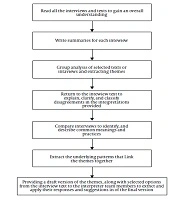
Data analysis was done using an inductive method, following Elo and Kyngas's approach (14). The first step, the preparation phase, involved selecting the unit of analysis and understanding the logical relations between the data and the overall topic. This study used the transcribed interviews as the unit of analysis. Consequently, the audio-recorded interviews were carefully transcribed and studied immediately after completion. The written texts were meticulously checked and read multiple times to deepen the understanding of the data, better realize what was occurring in the data, and comprehend the feelings and experiences of the participants by asking questions such as “What is happening?” “Who speaks?” “Where is this happening?” “When did this happen?” “What happened ” and “Why?”
Both the manifest and latent content of the data were analyzed according to the study's purpose. The next step, the organization phase, encompassed several steps, including open coding, category creation, and abstraction. Initially, the researcher identified explicit and implicit concepts in what the participants said and assigned primary codes to related semantic units. Subsequently, similar primary codes were classified into subcategories. Conceptually identical subcategories were then integrated to form generic categories, and semantically similar generic categories were combined to create the main categories. All the authors worked together to complete these processes. The initial analysis was conducted in Persian and then translated into English. MAXQDA version 10, a qualitative data analysis software developed by VERBI Software in Berlin, Germany, was used for analysis. Finally, during the reporting phase, the sampling process, characteristics of participants, data collection, data analysis, and study findings were reported in detail.
3.6. Strategies to Achieve Rigor in the Study
Lincoln and Guba's criteria were used to ensure the accuracy of research results. The requirements included establishing credibility, dependability, confirmability, and transferability (15). The current study established credibility by conducting interviews with informed participants, using an appropriate sample size, and the researchers' prolonged engagement with the data. The supervisors reviewed the processes of interviewing, coding, categorizing, and interpreting the findings to ensure their accuracy. To ensure dependability, an independent researcher skilled in qualitative research was given the data to conduct an independent examination and confirm the categories. To ensure confirmability, three reviewers were involved in reviewing the decision trail of the study, as well as the findings, interpretations, and conclusions. The study attempted to present a clear description of the participants' context, sampling, and characteristics, as well as the data collection and analysis process, to ensure transferability.
4. Results
4.1. Participants Characteristics
Sixteen HIV-infected women participated in the study. Details of participants’ characteristics are provided in Table 1. Seventy-five percent of the participants had disclosed their HIV status to at least one person in their social network. The following descriptions synthesize and summarize the interviewed participants' responses.
Table 1.
Patients’ Characteristics
| Patients | Age (y) | Education | Relationship Status | Occupation | Years of Disease | Viral Load Status |
|---|---|---|---|---|---|---|
| 1 | 31 | HS | Divorced | Unemployed | 14 | Detectable |
| 2 | 34 | HS | Widow | Unemployed | 15 | Detectable |
| 3 | 44 | ES | Abandoned by spouse | Unemployed | 9 | Undetectable |
| 4 | 46 | ES | Widow | Unemployed | 13 | Undetectable |
| 5 | 49 | JS | Widow | Unemployed | 9 | Undetectable |
| 6 | 41 | JS | Married | Housewife | 4 | Undetectable |
| 7 | 45 | D | Married | Housewife | 9 | Undetectable |
| 8 | 27 | D | Married | Public relations manager | 27 | Undetectable |
| 9 | 46 | D | Widow | Charity manager | 21 | Undetectable |
| 10 | 43 | D | Married | Hotel worker | 20 | Detectable |
| 11 | 42 | D | Married | Housewife | 9 | Undetectable |
| 12 | 43 | ES | Widow | Part-time job | 4.5 | Undetectable |
| 13 | 45 | JS | Widow | Caring for the elderly | 10 | Undetectable |
| 14 | 29 | D | Multiple sexual relations | Sex worker | 7 | Detectable |
| 15 | 35 | BD | Multiple sexual relations | Part-time job | 10 | Undetectable |
| 16 | 37 | D | Divorced | Hairstylist | 1.7 | Undetectable |
Abbreviations: HS, high school; ES, elementary school; JS, junior school; D, diploma; BD, bachelor’s degree.
4.2. Main Theme
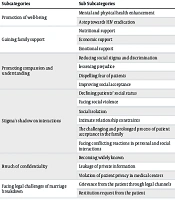
The main theme identified was a dual attitude toward HIV disclosure, consisting of two categories: Perceived well-being and perceived personal and social challenges. The sub-subcategories, subcategories, categories, and the main theme emerged from the data analysis are summarized in Table 2.
Table 2.
Themes, Categories, Subcategories, and Sub Subcategories Extracted from the Study
| Theme | Categories | Subcategories | Sub Subcategories |
|---|---|---|---|
| Dual attitude toward HIV disclosure | Perceived well-being | Promotion of well-being | Mental and physical health enhancement |
| A step towards HIV eradication | |||
| Gaining family support | Nutritional support | ||
| Economic support | |||
| Emotional support | |||
| Promoting compassion and understanding | Reducing social stigma and discrimination | ||
| lessening prejudice | |||
| Dispelling fear of patients | |||
| Improving social acceptance | |||
| Perceived personal and social challenges | Stigma's shadow on interactions | Declining patients’ social status | |
| Facing social violence | |||
| Social isolation | |||
| Intimate relationship constraints | |||
| The challenging and prolonged process of patient acceptance in the family | |||
| Facing conflicting reactions in personal and social interactions | |||
| Breach of confidentiality | Becoming widely known | ||
| Leakage of private information | |||
| Violation of patient privacy in medical centers | |||
| Facing legal challenges of marriage breakdown | Grievance from the patient through legal channels | ||
| Restitution request from the patient | |||
| Family well-being concerns | Patients’ family emotional upheaval | ||
| Social violence against patients’ family |
4.3. Category 1: Perceived Well-Being
Perceived well-being reflected positive individuals’ perceptions and experiences of disclosing their HIV status, summarized in three subcategories: Promotion of well-being, gaining family support, and promoting compassion and understanding.
4.3.1. Promotion of Well-Being
Participants found benefits in disclosing their HIV status, such as emotional relief, tailored medical treatment, and easier medication management:
“Sharing my diagnosis has been incredibly beneficial for me. I feel a sense of peace and tranquility. I now attend counseling sessions and medical appointments without any fear or apprehension. My family's awareness of my condition means I no longer worry about being discovered, allowing me to openly manage my medications and adhere to my treatment schedule without hesitation.” (Participant 9, 46 years old)
Participants also saw disclosure as a chance to raise awareness, motivate others to get tested, and reduce transmission risk through safer sex practices:
“I disclosed my status to my partner because we might want to get pregnant in the future, so he should take medicine to avoid getting infected. I should have told him why he should use a condom. ” (Participant 12, 29 years old)
4.3.2. Gaining Family Support
Participants who disclosed their HIV status to their families experienced multifaceted benefits, including emotional, economic, and nutritional support. Additionally, they found that their dependents actively cooperated in providing care and participating in treatment follow-ups:
“My family helped me to follow up on medical issues; for example, my sister took care of my child so that I could go and do my tests, or go to the doctor.” (Participant 7, 45 years old)
4.3.3. Promoting Compassion and Understanding
Participants believed that disclosing their illness to peers not only allowed them to instill hope and boost morale but also brought about broader positive impacts, including reducing social stigma and discrimination, lessening prejudice, dispelling fear of patients, and improving social acceptance:
“You see, disclosure is good. When people hear about HIV more often, they will get used to it, they won't discriminate anymore. Their negative thoughts and fears towards us will be lessened as well.” (Participant 11, 42 years old)
4.4. Category 2: Perceived Personal and Social Challenges
Perceived personal and social challenges encompassed the unpleasant perceptions and experiences of participants regarding the disclosure of their HIV status. Four subcategories were identified under perceived personal and social challenges: Stigma’s shadow on interactions, breach of confidentiality, facing legal challenges of marriage breakdown, and family well-being concerns.
4.4.1. Stigma's Shadow on Interactions
Participants faced stigma, discrimination, and challenges after disclosing their HIV status, leading to social isolation, rejection, and potential loss of job opportunities:
“When we disclose our HIV status to others, they often make incorrect assumptions. They may wrongly believe we engaged in illicit relationships or are drug addicts. This leads to disgrace, discredit, and rejection.” (Participant 8, 27 years old)
They also reported varied and contradictory reactions from family members, healthcare staff, and society in general, highlighting the need for greater understanding and acceptance of HIV/AIDS:
“The doctor had prescribed me an ampoule. I told the nurse who was going to inject me that I had HIV. She became pale and said, 'Go somewhere else, I will not give you this injection.' In certain places, like at the dentist, when I told the doctor that I have HIV, he thanked me for telling him and said, 'God bless you for letting me know,' and then he filled my tooth.” (Participant 7, 45 years old)
4.4.2. Breach of Confidentiality
The analysis of participants' experiences revealed that they regarded disclosure as a threat to their confidential identity, leading to the breach of anonymity and widespread recognition. Instances were observed where recipients shared the patients' disease status without consent, contrary to the participants' wishes. Additionally, participants cited the lack of privacy in medical centers as a disadvantage following disease disclosure:
“The clinic's secretary glanced at my file during my colposcopy appointment at the hospital and, without considering my privacy, loudly asked, 'Do you have AIDS?' The words echoed through the waiting room, causing all eyes to fixate on me. At that moment, I felt the burden of their scrutiny and misunderstanding.” (Participant 11, 42 years old)
4.4.3. Facing Legal Challenges of Marriage Breakdown
Participants reported that disclosing their illness to sexual partners or spouses resulted in legal complications, with partners filing complaints against the patients, leading to their involvement in legal issues:
“My husband threatened me that he would go to court and file a complaint against me. He went to court and sued me. He also filed for a divorce. I got involved in court proceedings. He wanted to take money from me but he didn't care about what God wanted. We argued a lot and finally, he divorced me.” (Participant 16, 37 years old)
4.4.4. Family Well-Being Concerns
Participants highlighted additional negative outcomes of HIV disclosure for the patients' families, including creating emotional turmoil and exposing them to social violence. Family shock, worry, and resentment emerged from data analysis as perceived consequences of HIV status disclosure:
“If I were to disclose my AIDS diagnosis to my parents, it would undoubtedly shock them. They wouldn't find any peace in the aftermath. Their worry would be unrelenting, leaving them restless for an extended period.” (Participant 9, 46 years old)
Participants perceived the potential impact on their families' reputations, anticipating blame, stigmatization, and the possibility of being rejected by acquaintances due to the disclosed illness:
“If I am known for having HIV, it will affect the people around me and my family. For example, those who socialize with my family may reject them because of me or say nasty things to them.” (Participant 13, 45 years old)
5. Discussion
According to this study, most participants had disclosed their illness to at least one person in their social network based on personal conditions and the benefits they envisioned for themselves. The participants were more likely to have negative attitudes rather than positive attitudes toward disclosing their status in social, individual, and interpersonal contexts. These negative attitudes predominantly originated from the societal stigmas surrounding HIV disease in Iranian culture, consistent with corroborative evidence from analogous research studies (16, 17).
Linking the mode of HIV transmission with anti-value behaviors, both from the religious and moral point of view in Iranian culture, leads to a change in society's view of HIV patients and the loss of their social status. A study done in Iranian society shows that social stigma threatens the identity of HIV patients (18-20). It's worth noting that HIV-related stigma can manifest in various ways, including discrimination and social exclusion (21, 22). This stigma often arises from misinformation, lack of awareness, and cultural perceptions (23, 24). In Iran, certain individuals believe that the virus can be spread through physical contact, saliva, utensils, or toilet seats (25).
The fear of being stigmatized can have severe consequences and prevent people living with HIV from receiving vital treatments. Epidemiological studies conducted between 2010 and 2019 highlight that stigma and discrimination among Iranians with HIV pose challenges for patients, impeding their access to healthcare services, including antiretroviral therapy (ART) (26). Therefore, addressing the lack of knowledge and high social stigma in the context of HIV involves comprehensive education campaigns to dispel myths, promote accurate information, and foster awareness, which are essential needs in Iranian society.
Aligned with existing research, participants faced challenges in feeling secure and confident about disclosing their illness (27-31). Although health service providers are obligated to maintain confidentiality (32), breaches were reported, potentially hindering healthcare-seeking behavior and ART adherence (27, 30) Additionally, legal problems arose for some participants due to the criminalization of HIV transmission in Iran (paragraph B, article 290 of the Islamic penal code). Consequently, some patients who believe that they might have infected their sexual or injection partner might avoid disclosing their illness. Addressing confidentiality concerns and legal implications is crucial to facilitating disease disclosure, ensuring public health, and promoting a supportive environment for individuals with HIV.
The conflicting consequences of disclosure for HIV patients were another result of the qualitative data analysis of the present study, which agrees with the findings of the study conducted in Tehran by Shahabi et al. (17). Depending on the circumstances and to whom they disclosed their illness, the patients were either accepted or rejected and faced sympathetic or unsympathetic behaviors. It seems that the consequences of disclosure for patients may differ under the influence of the disclosure audience's social, cultural, and personality characteristics.
Consistent with the findings of other studies, our study results showed that HIV disclosure by patients imposes emotional and social challenges on their families (33-35). Families experience shock, fear, and sadness, compounded by concerns for their loved one's well-being. Societal stigma worsens this burden, leading to isolation and distress. Families also struggle with social dynamics, facing judgment, discrimination, and rejection (34, 36). Healthcare providers must support families with counseling, education, and resources to address these challenges. Open communication and empathetic care can mitigate HIV-related stigma and help families cope effectively.
This study provided evidence of the positive impact of HIV disclosure on individual and community well-being. According to unanimous studies (37, 38), disclosure is linked to improving physical health through better access to treatment and medication adherence. However, this study found its effects on mental well-being to be positive, though the evidence remains equivocal. Some studies confirm the improvement of mental health (39, 40), while others consider negative mood and increased anxiety as a result of disclosing the disease (41-43). It seems that the level of social support and the positive or negative experiences of patients from the consequences of disclosure can affect the mental dimension of health, and disease disclosure does not play an independent role.
The results of this study, in line with previous studies, showed that disclosing the disease provides situations for patients to benefit from the support of people in their social network, like family members, relatives, partners, friends, etc. (44-46). The process of accepting a patient into the family was complicated and time-consuming, with only a few patients going through this experience. However, one clear finding is that family support was one of the long-term benefits of HIV disclosure for them. Therefore, disclosing the disease can be considered a mediating factor to improve the patient’s mental health.
Additionally, based on the results of the current study, in line with other studies (47, 48), HIV disclosure plays a role in preventing new infections and slowing the spread of HIV by fostering awareness, informed reproductive choices, testing, and treatment.
In this study, participants found that disclosing their HIV status positively enhanced social compassion and understanding. Despite potential exposure to stigma and discrimination, participants believed that sharing their status promotes community dialogue about HIV, cultivating an increased willingness to share experiences. The perceived effect was a gradual reduction in social stigma and discrimination against HIV patients. As patients gain empowerment and willingness to disclose their condition, a collective societal and national engagement will emerge, promoting open support in addressing the epidemic positively. This collective effort plays a pivotal role in diminishing the stigma and discrimination associated with HIV (49).
To the best of our knowledge, this study represents the first qualitative exploration of perceptual attitudes toward HIV disclosure among infected women in Iran. Despite the conceptual similarities of the current research with previous studies, the data cannot be generalized because only women referred to behavioral disease counseling centers were involved. Therefore, the findings of the study cannot be applied to men infected with HIV or to patients who were not at the center. Despite these limitations, the results significantly contribute to the literature, where few studies have addressed patients' attitudes.
5.1. Conclusions
In conclusion, the study illuminates the dual attitudes of women with HIV toward disclosing their disease, revealing a spectrum of positive and negative perceptions shaped by individual and social contexts. Notably, the research underscores that the predominant influence contributing to negative attitudes toward HIV status disclosure is rooted in social factors. These insights contribute to a comprehensive understanding of the complexities surrounding attitudes toward disclosure behaviors among women living with HIV.
To address these complexities, healthcare providers play a crucial role in supporting patients and their families through the disclosure process, providing counseling, education, and resources to address emotional and social challenges. Additionally, comprehensive education campaigns are essential to dispel myths, promote accurate information, and foster awareness within Iranian society. Furthermore, fostering open conversations, community engagement, and destigmatization efforts tailored to cultural sensitivities can help cultivate a more informed and accepting society.
The similarity of the findings of this qualitative research with previous studies highlights the common social realities of the disease. Investigating patients' attitudes toward disclosing their status may have unique value in planning health education and health promotion and developing guidelines related to HIV disclosure. It can also broaden the view of policymakers and community affairs executives about different perspectives on the issue. This can facilitate disease disclosure at individual, interpersonal, social, and public levels.