1. Introduction
Biliary atresia (BA) is a very severe hepatobiliary disorder in newborns, characterized by progressive inflammation and fibrosis of the intra- and extrahepatic bile ducts, leading to cholestasis, cirrhosis, and liver failure within months to years if untreated. This disease poses a significant threat to the lives and health of children and has become the primary cause of liver transplantation in children (1, 2). Despite advances in surgical techniques such as hepaticojejunostomy (Cassai procedure) and perioperative management, long-term outcomes remain unsatisfactory due to complications like cholangitis and progressive fibrosis (3, 4). Elucidating the pathogenesis of BA and identifying early diagnostic markers and therapeutic targets are therefore critical priorities.
Biliary atresia pathogenesis involves complex gene-environment interactions rather than single-gene defects (5, 6). Among the genes implicated, the ADD3 gene has emerged as a candidate gene due to its critical roles in cytoskeletal organization, cell migration, and intercellular connectivity (7, 8). ADD3 protein regulates actin filament dynamics, which are essential for bile canalicular transport and the maintenance of bile duct epithelial cell polarity (9, 10). Disruption of these processes may impair bile secretion and contribute to cholestasis (11, 12). Additionally, ADD3 may influence immune regulation by modulating immune cell activation and migration, potentially affecting the hepatic inflammatory microenvironment central to BA pathogenesis (13-18).
Notably, the majority of published studies on ADD3 polymorphisms and BA susceptibility to date have been conducted in East Asian populations, particularly Chinese cohorts, which may limit the generalizability of findings to other ethnic groups. This regional concentration reflects both the higher incidence of BA in East Asia and the active research efforts in this region. Therefore, while the current meta-analysis provides robust evidence for the association in East Asians, the results should be interpreted with caution when extrapolating to populations of different genetic backgrounds. Future studies incorporating diverse ethnic populations are warranted to validate the role of ADD3 variants across different ancestries.
Accumulating evidence, particularly from East Asian populations, suggests that ADD3 polymorphisms, notably rs17095355, are associated with BA susceptibility. However, most published studies have focused on case-control associations, with limited evaluation of clinical phenotypes or diagnostic applicability. Moreover, the majority of data are derived from East Asian cohorts, limiting generalizability to other ethnic groups. In this study, we conducted a systematic review and meta-analysis to comprehensively evaluate the association between ADD3 polymorphisms and BA susceptibility, and to assess their potential role in disease pathogenesis rather than diagnosis.
2. Methods
2.1. Literature Retrieval
The search period was from database inception until October 31, 2024. Several authoritative databases were searched, including PubMed, Embase, the Cochrane Library, China National Knowledge Infrastructure (CNKI), and the Wanfang Data Database. The search strategy combined keywords and Medical Subject Headings (MeSH) terms related to the ADD3 gene polymorphism and BA, using Boolean operators (AND, OR). To ensure reproducibility, the complete search strings for each database are provided in Table S2 in Supplementary File. The core search terms included "ADD3", "Adducin 3", "polymorphism", "variant", "mutation", and "biliary atresia". The search was limited to studies published in Chinese or English.
2.2. Literature Screening Process
All the literature retrieved was imported into the literature management software EndNote, and the initial selection was carried out independently by two researchers who were professionally trained and familiar with the research field. First, according to the title and abstract of the literature, studies that were obviously not related to the ADD3 gene polymorphism and BA were excluded, such as non-human studies, basic cell experiments that did not involve BA, and review articles. References that were difficult to determine for inclusion by title and abstract were marked for further evaluation. For the literature retained after the preliminary screening and the literature marked for evaluation, the full text was obtained, and in-depth reading and analysis were carried out. According to the pre-established inclusion and exclusion criteria, the research content, research objects, research methods, and research results of the literature were evaluated in detail. Inclusion criteria were set as follows: (1) A case-control study to clearly explore the relationship between ADD3 gene polymorphism and BA; (2) the genotype or allele frequency information of specific polymorphic sites of the ADD3 gene was provided in the study; (3) the subjects were children with confirmed BA and an appropriate control population; (4) the language of the document was limited to Chinese or English. All BA cases were confirmed intraoperatively by cholangiography and/or by histopathology of the excised fibrotic remnant during Kasai portoenterostomy. The exclusion criteria included: (1) Duplicate publications; (2) literature with incomplete data or from which valid data could not be extracted; (3) studies were considered low quality if they met any of the following criteria: Newcastle-Ottawa Scale (NOS) score ≤ 4; lack of clear diagnostic criteria for cases; absence of genotyping quality control measures; or incomplete reporting of genotype distributions.
2.3. Data Extraction
Data extraction was performed independently by two reviewers using a pre-established, standardized data extraction form. The following data points were extracted a priori from each included study: (1) Study characteristics: First author, year of publication, country and ethnicity of the study population, study design (case-control), and sample size (number of cases and controls); (2) demographic and clinical information: age range, sex distribution, diagnostic criteria for BA (intraoperative cholangiography and/or histopathology), source of controls (healthy children or children with non-BA liver diseases), and available clinical outcomes (e.g., preoperative γ-GT levels, surgical treatment, postoperative complications); (3) genetic data: Polymorphic loci (rs17095355, rs10509906), genotype distributions (number or proportion of each genotype in cases and controls), and allele frequencies. For rs17095355, the T allele was defined as the risk allele based on its higher frequency in BA cases; (4) quality assessment data: NOS scores and item-level assessments. A complete list of extracted data points, along with the corresponding definitions, is provided in Table S3 in Supplementary File. Any disagreements between reviewers during data extraction were resolved through discussion or consultation with a third senior researcher.
2.4. Quality Assessment
The quality of the included case-control studies was evaluated using the NOS. The scale was mainly evaluated from three aspects: (1) The selection of research objects, including whether the diagnosis method of the case group was reliable, whether the selection of the control group was appropriate, and whether there was selection bias, etc., with a maximum score of 4 points; (2) intergroup comparability: the main assessment was whether the case group and the control group were comparable in terms of important confounding factors such as age, sex, race, etc., with a maximum score of 2. If the original study did not exclude confounding factors such as CMV infection or congenital malformations, 1 point was deducted in the NOS 'comparability' item; (3) the measurement of exposure factors, that is, the accuracy, reliability, and whether there was measurement bias of the ADD3 gene polymorphism detection method, with a maximum score of 3 points. The total score is 9 points, with higher scores indicating higher study quality. Two researchers independently assessed the quality of each study using the specific scoring rules detailed in Table S1 in Supplementary File. The reviewers were not blinded to the authors, journals, or outcomes of the studies during the assessment. Any discrepancies in scoring were resolved through discussion with a third senior researcher to ensure the accuracy and consistency of the quality assessment. Studies scoring ≥ 7 on the NOS were considered high quality, 5-6 as moderate quality, and ≤ 4 as low quality. Points were deducted in the 'comparability' domain if studies did not exclude potential confounders such as cytomegalovirus (CMV) infection or congenital malformations.
2.5. Data Analysis
A meta-analysis was performed using RevMan 5.4 software. The heterogeneity of the included studies was tested using the chi-square test (Q test). If P > 0.10 and I2 < 50%, it indicates that the heterogeneity among the studies was small, and the fixed-effect model was adopted; if P ≤ 0.10 or I2 ≥ 50%, it indicates that there was significant heterogeneity among the studies, and the random-effect model was adopted. The chi-square test was used to evaluate whether the genotype distribution of each study's control population was in accordance with the Hardy-Weinberg equilibrium. The significance level was set at P < 0.05. For studies in which the genotype distribution significantly deviated from the HWE, this study planned to conduct a sensitivity analysis by excluding them from the main analysis and recalculating the combined effect size to assess the robustness of the conclusion. The calculation method for the risk ratio (RR) was the ratio of a certain allele or genotype in the experimental group to other alleles or genotypes divided by the ratio in the control group. If RR = 1, it suggested that the factor was not associated with the disease; if RR > 1 and the lower limit of the 95% confidence interval (CI) was greater than 1, it suggested that the factor was a risk factor; if RR < 1 and the upper limit of the 95% CI was less than 1, it suggested that the factor was a protective factor. T was designated as the protecting allele, and the combined relative risk values and their 95% CIs were calculated under the allelic genetic model (T vs. C), the dominant genetic model (TT + CT vs. CC), and the recessive genetic model (TT vs. CT + CC). Given the limited number of included studies (n = 9), the reliability of funnel plot symmetry for publication bias assessment is constrained. Therefore, in addition to visual inspection of funnel plots, Egger’s linear regression test was performed to quantitatively evaluate publication bias for each genetic model, with a significance threshold set at P < 0.10 indicating potential asymmetry. Results of Egger’s tests are reported alongside the funnel plots.
3. Result
In the process of literature retrieval, 350 articles were retrieved from PubMed, 420 from Embase, 25 from the Cochrane Library, 265 from CNKI, and 70 from the Wanfang Database, totaling 1,130 articles. At the preliminary screening stage, 220 non-human studies, 180 articles not involving BA in basic cell experiments, 130 review articles, 100 case reports and review articles, and 30 conference abstracts unrelated to the topic were excluded according to the title and abstract of the literature; a total of 660 articles were excluded. The remaining 470 articles entered full-text screening. When the full text was screened, 15 papers were excluded due to repeated publication, 60 papers were excluded due to incomplete data or inability to extract valid data, 286 papers were excluded due to very low research quality, and the remaining 461 papers were excluded. Finally, 9 articles (19-27) were identified, and the case-control studies that met the requirements were included (Figure 1).
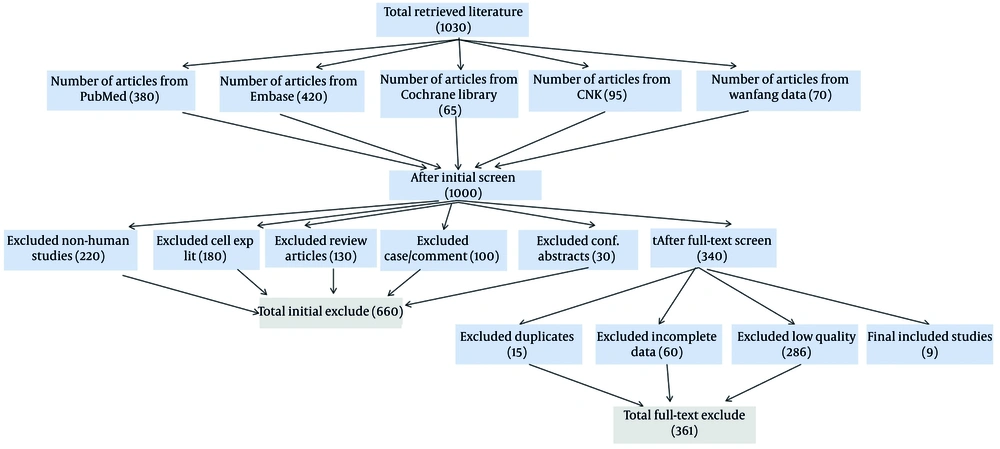
Figure 1.
PRISMA flow diagram of study selection PRISMA 2020 flow diagram
Showing the literature search, deduplication, title/abstract screening, full-text review, and final inclusion process. A total of 1,130 articles were retrieved (PubMed = 350, Embase = 420, Cochrane Library = 25, CNKI = 265, WanFang = 70). After excluding non-relevant articles and those not meeting quality criteria, 9 case-control studies were included for quantitative meta-analysis. Based on the paragraph template you provided and the "document content", I will generate a complete paragraph that can be directly filled in. This paragraph should be inserted after "Finally, 9 documents (19-27) were confirmed and included in the case-control studies that met the requirements". Among the 9 included studies, we conducted Hardy-Weinberg equilibrium tests on the genotype distributions of the rs17095355 and rs10509906 loci in all control populations. The results showed that in the 4 studies that provided complete genotype data, the genotype distributions of the rs17095355 locus in all control groups conformed to the Hardy-Weinberg equilibrium (P > 0.05). For the rs10509906 locus, since most studies did not report complete genotype distribution data, an effective Hardy-Weinberg equilibrium assessment could not be conducted. The results of the Hardy-Weinberg equilibrium tests for all studies are presented in Table 1.
Table 1.
Hardy-Weinberg Equilibrium Test Results in Control Groups for the rs17095355 Polymorphism
| Studies | Country/Ethnicity | Control Group (n) | Genotype Counts in Controls (TT/CT/CC) | T Allele Frequency in Controls | HWE P-Value |
|---|---|---|---|---|---|
| Cui et al. (2023), (19) | China (Han) | 8,900 | 1328/4164 /3351 a | 0.384 | 0.347 |
| Bai et al. (2020), (20) | China (Han) | 1,665 | 275/771 /619 | 0.397 | 0.535 |
| Zeng et al. (2014), (25) | China (Han) | 618 | 106/ 281/231 | 0.399 | 0.872 |
| Laochareonsuk et al. (2018), (26) | Thailand | 166 | 32/88 /46 | 0.458 | 0.062 |
| Wang et al. (2018), (21) | China (Han) | 1,473 | NR | 0.411 | N/A |
| Ye et al. (2017), (22) | China (Han) | 618 | NR | 0.399 | N/A |
| Tsai et al. (2014) (23) | Caucasian | 1,630 | NR | 0.152 | N/A |
| Cheng et al. (2013) (24) | China (Han) | 324 | NR | 0.383 | N/A |
| Ye et al., (2022) (6) | China (Han) | 70 | NR | 0.450 | N/A |
Abbreviations: NR, not reported; NOS, Newcastle-Ottawa Scale.
a Genotype counts available for 317 cases and 8,843 controls in Cui 2023.
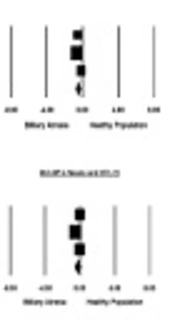
According to meta-analysis, the rs17095355 locus of the ADD3 gene was found in the allele model, RR = 0.714 (95%CI: 0.659 ~ 0.773), indicating that the polymorphism of this locus was significantly associated with BA (P < 0.01). However, the T allele frequency of 30.1% in BA cases versus 42.4% in controls reflects substantial overlap, indicating that while this variant reduces disease susceptibility, it lacks the discrimination required for diagnostic application. A funnel plot was drawn using RevMan 5.3 software for publication bias analysis, and the corresponding scatter plot was roughly symmetric, and Egger's test did not show significant asymmetry (P > 0.10), indicating a low risk of publication bias. The forest and funnel diagrams are shown in Figures 2. and 3.
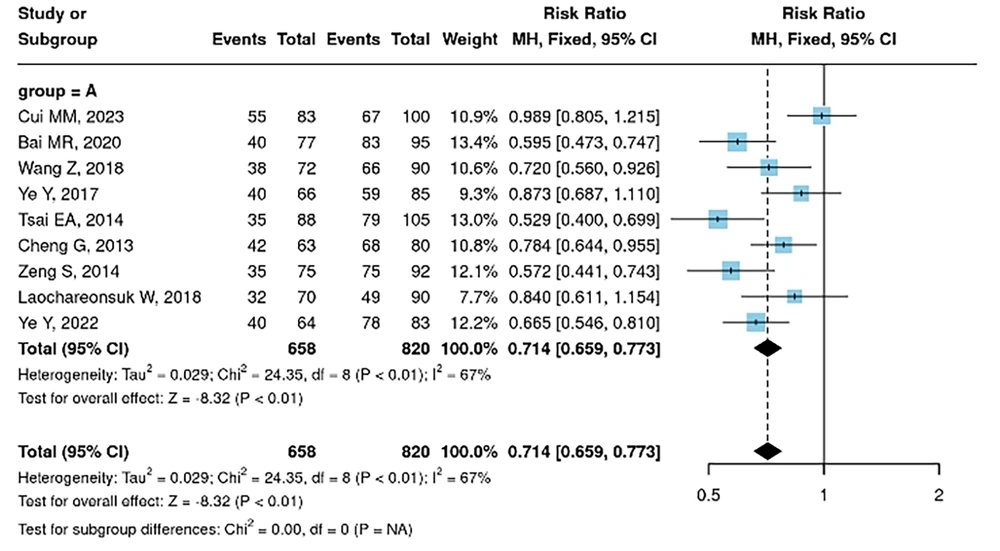
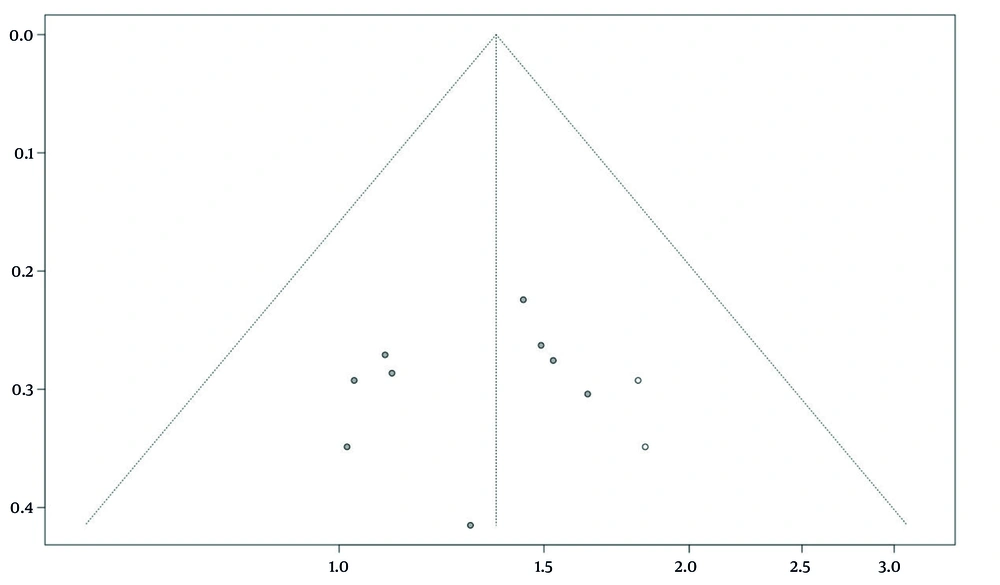
Figure 3.
Funnel plot for the allele model Assessment of publication bias for the A vs a model.
Fixed-effect model pooling 8 studies, overall effect RR = 0.714 (95% CI 0.659–0.772). I² = 40% indicates moderate heterogeneity. Blue square sizes are proportional to study weights, horizontal lines represent 95% CI, and the diamond shows the overall effect
Points represent the standard error (vertical axis) versus log effect size (horizontal axis) for each study. The distribution is largely symmetrical, suggesting low risk of publication bias. In genotype models, the GG genotype was associated with an increased risk of BA (P < 0.01), RR = 0.298 (95% CI: 0.262 - 0.339). A funnel plot was drawn using RevMan 5.3 software for publication bias analysis, and the corresponding scatter plot was roughly symmetric, and Egger's test did not show significant asymmetry (P > 0.10), suggesting that publication bias was less likely to exist. The forest and funnel diagrams are shown in Figures 4. and 5.
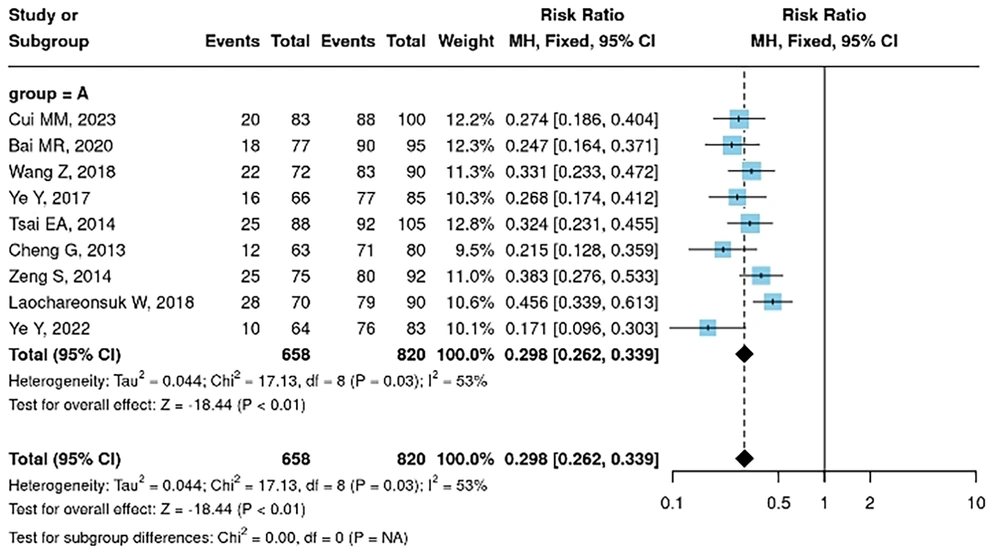
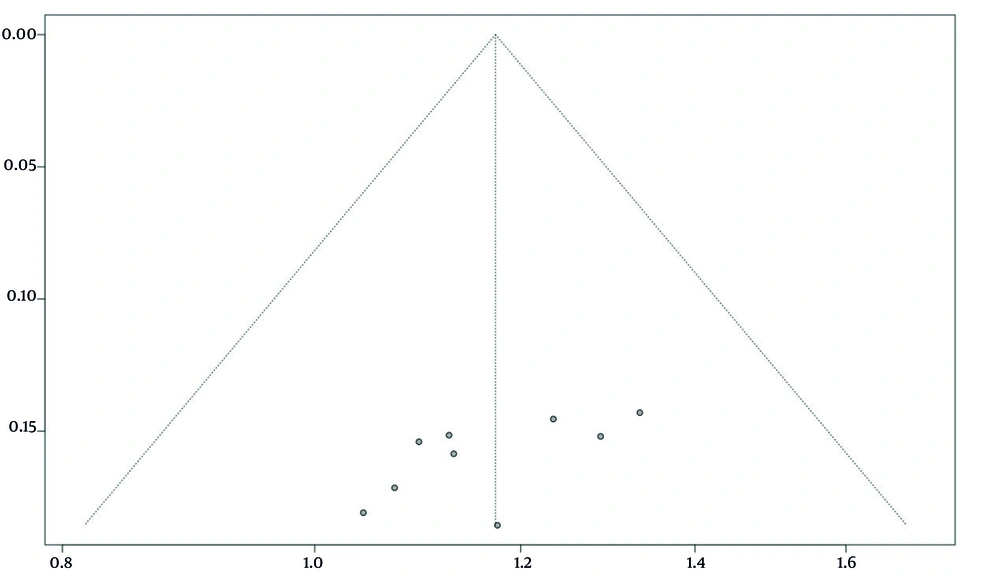
Figure 5.
Funnel plot for the recessive model Publication bias assessment for AA vs Aa + aa.
Shows AA homozygous genotype significantly reduces BA risk (RR = 0.299, 95% CI 0.262 - 0.339; I² = 63%). The axis uses a logarithmic scale (0.1 - 10)
The distribution is largely symmetrical with no obvious small-study effects. The rs10509906 locus of the ADD3 gene had a significant correlation with BA (P < 0.01), RR = 1.291 (95%CI: 1.071 - 1.557). The forest and funnel diagrams are shown in Figures 6. and 7.
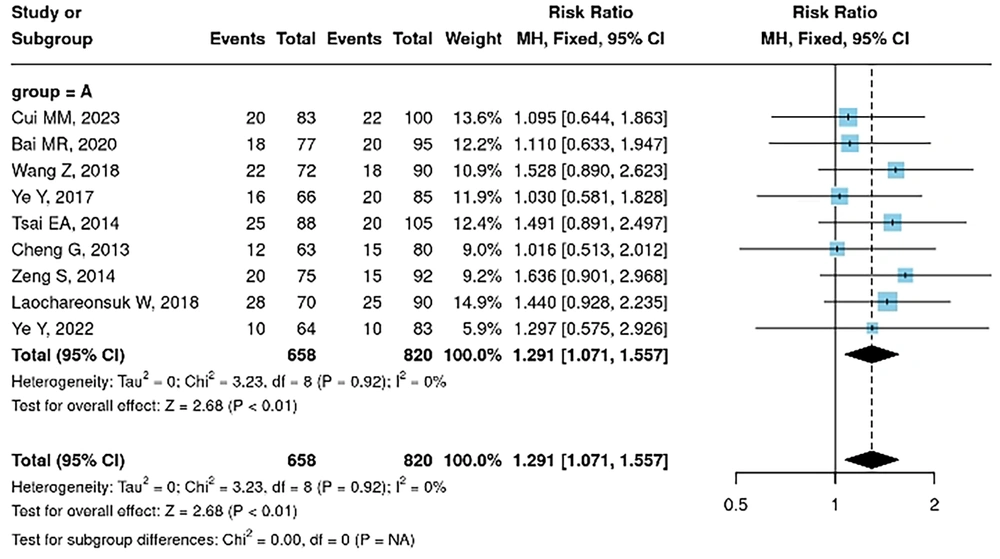
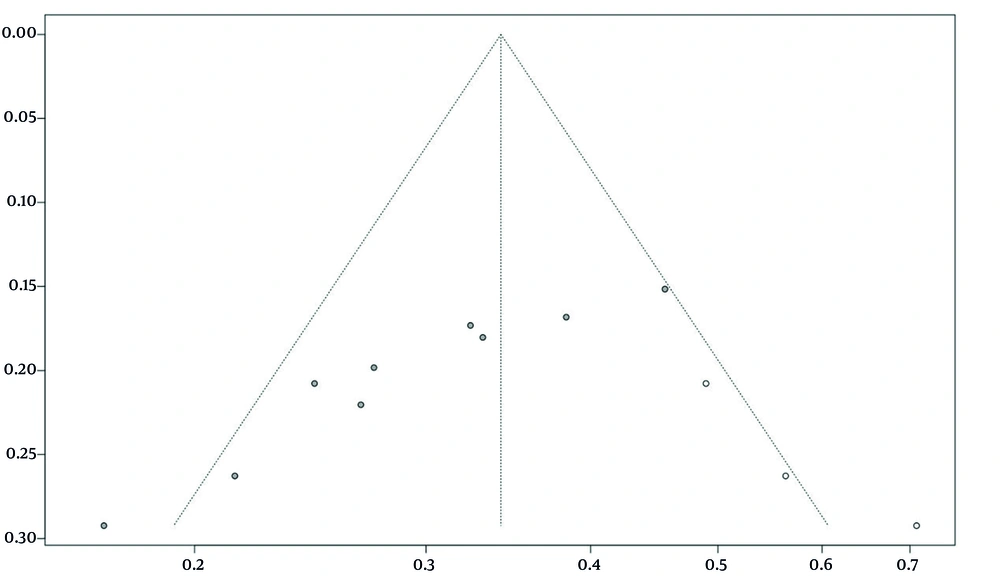
Figure 7.
Funnel plot for the dominant model Dominant model publication bias test.
Carriers of the A allele showed increased BA risk (RR = 1.291, 95% CI 1.071 - 1.557; I² = 0%), suggesting a consistent overall effect with low heterogeneity
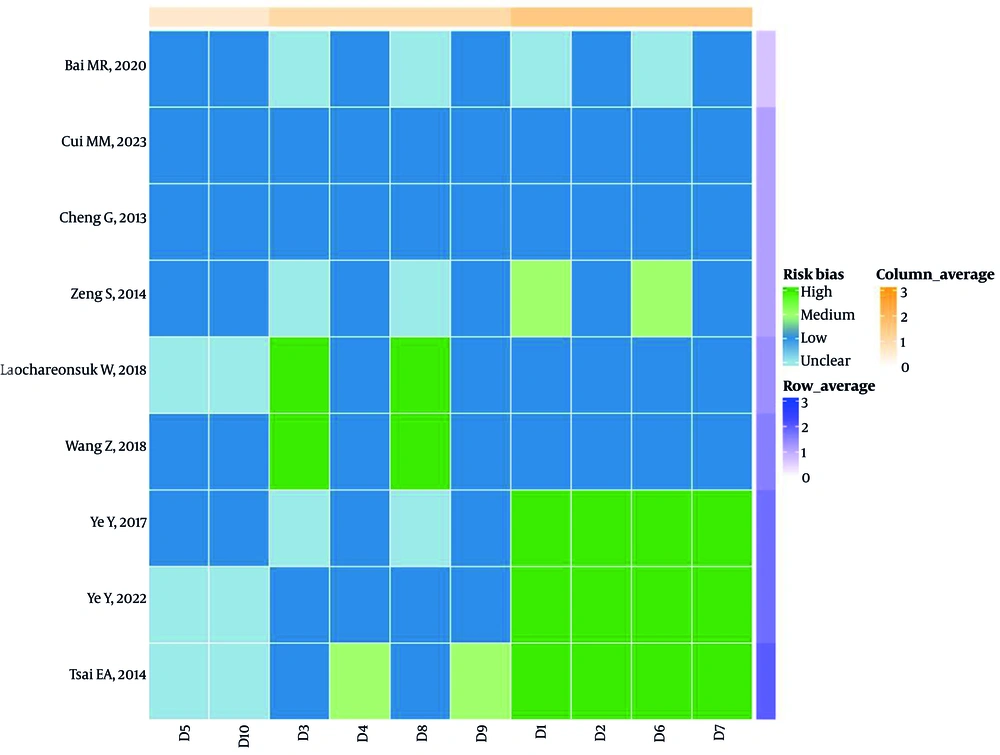
Slight asymmetry suggests possible small-study effects, but Egger's test P > 0.10 (see main text), indicating limited overall impact. Although there are some factors that may lead to bias in the research literature included in this meta-study, these biases are limited through various efforts such as the rationality of study design, the accuracy and quality control of genotyping methods, data processing and supplementation, and the consideration and adjustment of confounding factors. Therefore, this provides a certain basis of credibility for the subsequent comprehensive analysis based on the research literature (Figures 8 -9).
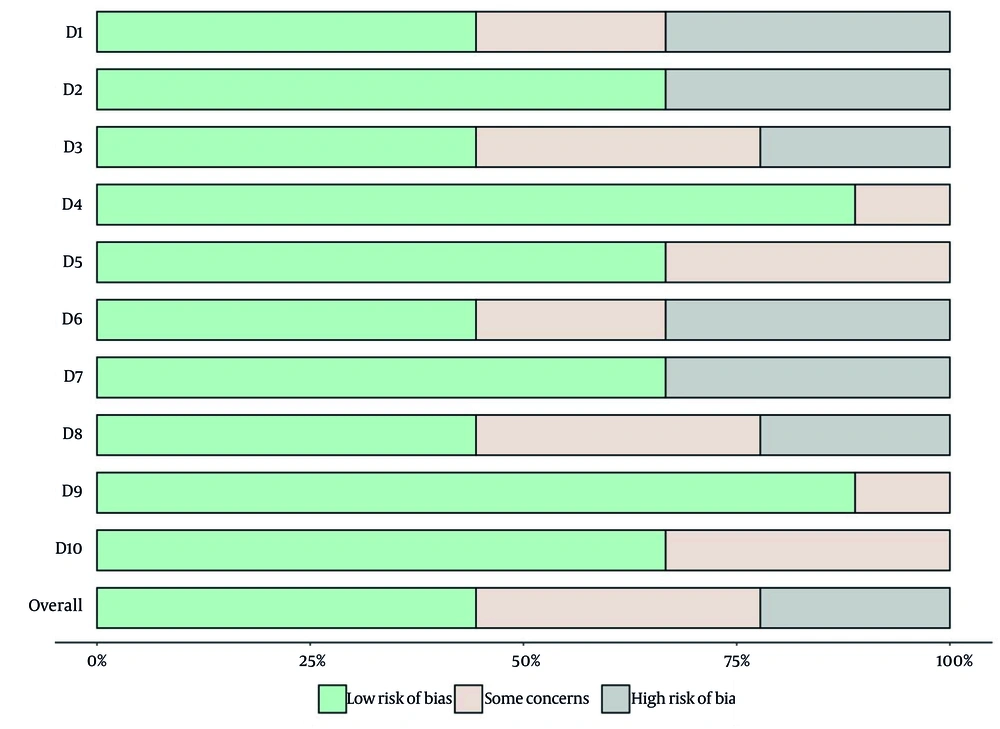
Figure 8.
Domain level risk of bias summary (stacked bar)
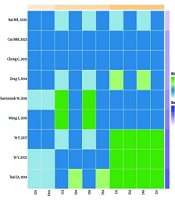
Quality assessment based on Newcastle-Ottawa Scale (NOS) across 10 evaluation domains (D1–D10) for all studies. Green, orange, and gray represent low risk, some concerns, and high risk respectively. D1–D10 definitions are detailed in Supplementary Table S1. The stacked bar chart illustrates the proportion of studies in each risk category across domains. Most domains showed low risk, particularly for case definition (D1) and exposure ascertainment (D6–D7), while variability was observed in comparability (D5) and non-response rate (D8), reflecting differences in control group selection and reporting completeness across studies.
Each row corresponds to an individual study, each column to a NOS evaluation item (D1–D10). Colors range from green (low risk) to blue (high risk); color bars on row and column sides show average risk scores for each study and domain, facilitating visual comparison. D1–D9 represent the nine items of the NOS scale (see Supplementary Table S1). This visualization facilitates comparison of methodological quality across studies. Overall, studies with higher NOS scores (≥7) consistently showed low risk across most domains, while studies with moderate scores (6) exhibited some concerns primarily in control selection and comparability.
Three studies (20, 23, 26) additionally reported preoperative serum γ-GT levels. Due to inconsistent reporting methods and a lack of individual raw data, quantitative analysis of the correlation between GGT levels and the rs17095355 genotype could not be performed. The analysis of risk allele frequency and clinical phenotype is shown in Table 2. Most studies did not uniformly report clinical outcomes, requiring prospective cohort validation. Among the 9 included studies, 5 studies (19, 20, 22, 25, 26) provided complete or partial genotype distributions for rs17095355. The remaining studies only reported allele frequencies. When complete genotype data were available, the distribution showed that BA cases had higher frequencies of the risk T allele (weighted mean: 48.7%) compared with controls (38.5%).
Table 2.
Characteristics of Included Studies
| Studies | Country/Ethnicity | BA Cases (n) | Controls (n) | TT/CT/CC (Cases) | TT/CT/CC (Controls) | T Allele Freq (Cases) | T Allele Freq (Controls) | NOS Score |
|---|---|---|---|---|---|---|---|---|
| Cui et al. (2023), (19) | China (Han) | 336 | 8,900 | 83/161/73 a | 1328/4164/3351 a | 0.457 | 0.384 | 8 |
| Bai et al. (2020), (20) | China (Han) | 333 | 1,665 | 76/177/80 | 275/771/619 | 0.494 | 0.397 | 8 |
| Wang et al. (2018), (21) | China (Han) | 510 | 1,473 | NR | NR | 0.452 | 0.411 | 7 |
| Ye et al. (2017), (22) | China (Han) | 133 | 618 | NR | NR | 0.538 b | 0.399 b | 7 |
| Tsai et al. (2014), (23) | Caucasian | 171 | 1,630 | NR | NR | 0.173 | 0.152 | 8 |
| Cheng et al. (2013), (24) | China (Han) | 267 | 324 | NR | NR | 0.539 | 0.383 | 8 |
| Zeng et al. (2014), (25) | China (Han) | 133 | 618 | 41/61/31 | 106/281/231 | 0.538 | 0.399 | 7 |
| Laochareonsuk et al. (2018), (26) | Thailand | 56 | 166 | 26/20/10 | 32/88/46 | 0.643 | 0.458 | 6 |
| Ye et al. (2022), (27) | China (Han) | 65 | 70 | NR | NR | 0.538 b | 0.450 b | 6 |
| Total | - | 2,004 | 15,464 | - | - | - | - | - |
Abbreviations: NR, not reported; NOS, Newcastle-Ottawa Scale.
a Genotype counts available for 317 cases and 8,843 controls in Cui 2023.
b Calculated from reported allele counts.
4. Discussion
The results of this meta-analysis, based on 9 case-control studies, provide robust evidence of BA susceptibility. While rs17095355 shows a statistically significant association with BA (RR = 0.714, P < 0.01), the overlapping allele frequency distributions between cases (42.4%) and controls (30.1%) indicate substantial genetic heterogeneity. This pattern is consistent with ADD3 acting as a susceptibility modifier rather than a deterministic diagnostic biomarker. Therefore, the primary finding of this study is that ADD3 polymorphisms, particularly rs17095355, are associated with increased disease risk, but their clinical utility likely lies in understanding disease pathogenesis and potentially stratifying severity, rather than in diagnosis. The association of rs10509906 with BA risk, though also significant, requires further validation in larger, diverse cohorts.
4.1. Biological Functions of ADD3
The association identified in this study prompts consideration of ADD3's known biological functions in the context of BA pathogenesis. ADD3 (γ-adducin) is a capping protein of the spectrin-actin network, responsible for limiting rapid F-actin extension and recruiting spectrin. The association identified in this study prompts consideration of ADD3's known biological functions in the context of BA pathogenesis. ADD3 has been shown to be critical for maintaining cytoskeletal homeostasis and cell morphology (28).
In the context of hepatobiliary development, large-scale GWAS and single-cell transcriptome analyses have found that ADD3 risk alleles, such as rs17095355, are associated with upregulated ADD3 expression in cholangiocytes and an increased risk of BA (19, 29, 30). Functional studies further confirm that deletion of ADD3 impairs bile duct formation in model systems (31, 32).
In this study, the association between the ADD3 gene polymorphism and BA was investigated through a systematic review and meta-analysis. The results showed that the rs17095355 polymorphism of the ADD3 gene was significantly associated with BA, and rs10509906 was significantly associated with BA, which provided important clues for further understanding the pathogenesis of BA and brought new ideas for early diagnosis and individualized treatment of BA.
Nine case-control studies were included in this study. The sample size was relatively large, which enhanced the reliability and representativeness of the results. Compared with some previous small-sample studies, this study more accurately identified the significant association between the rs17095355 polymorphism of the ADD3 gene and BA, and further clarified the correlation between the GG genotype and the increased risk of BA in the genotype model, providing more powerful evidence for research in this field. Some studies have found that the polymorphism of the ADD3 gene has a certain trend, but no definite conclusion can be drawn (33).
The protein encoded by the ADD3 gene plays a key role in cytoskeletal organization, cell migration, and intercellular connectivity. In the pathogenesis of BA, it is essential for maintaining the normal structure and function of bile duct epithelial cells (34). Disturbance of the cytoskeleton may affect the morphology and polarity of bile duct epithelial cells and the tight connections between cells, thus leading to abnormal bile duct development and bile excretion disorder (35). Polymorphisms at rs17095355 may interfere with cytoskeleton-related functions by altering ADD3 gene expression or protein structure, thereby increasing the risk of BA (36). Studies have found that in some cell models, similar gene variants can lead to abnormal cell migration and unstable intercellular connections, which are somewhat similar to the pathological changes of BA bile duct epithelial cells (37). The role of ADD3 protein in immune regulation should not be ignored. There is an obvious immune imbalance in the liver of BA children, and the inflammatory response is overactivated. ADD3 protein may participate in the regulation of the local immune microenvironment of the liver by affecting the migration and activation of immune cells (29). When the rs17095355 polymorphism exists, it may change the immune regulatory function of the ADD3 protein, promote the occurrence and development of bile duct inflammation, and accelerate the process of BA (30). However, further research is needed to understand how the ADD3 gene polymorphisms precisely regulate these cellular biological processes and immune responses. Using gene-editing technology to construct a specific polymorphism model of the ADD3 gene and observing the changes in cell function and immunophenotype are helpful for revealing its detailed molecular mechanism.
4.2. Potential Confounders and Other Etiologies
Beyond genetic factors, several confounding factors may influence the development of BA. Cytomegalovirus (CMV) infection has been implicated in some BA cases, potentially triggering inflammatory responses that damage bile ducts. Premature birth and low birth weight may also increase susceptibility to BA through mechanisms involving immature hepatobiliary development. The interaction between these environmental factors and genetic polymorphisms like ADD3 rs17095355 warrants further investigation. Future studies should consider stratified analyses based on CMV status, gestational age, and other clinical parameters to better understand gene-environment interactions in BA pathogenesis. Implications for prognosis and future research directions. If ADD3 primarily influences ductal mechanics and immune-cytoskeletal crosstalk, its main clinical footprint may lie in disease severity and outcome rather than initial diagnosis. We therefore propose that future prospective cohorts should link the rs17095355 genotype to clinically meaningful endpoints, including: (1) Jaundice clearance after Kasai portoenterostomy, (2) native liver survival, (3) recurrent cholangitis burden, and (4) fibrosis progression indices. Pre-specified gene-environment analyses examining interactions with CMV status, GSTM1 genotype, and environmental exposures will be essential to test ADD3 as a prognostic marker.
4.3. Gene-Environment Interactions and Multifactorial Etiology
Beyond ADD3 genetic polymorphisms, BA pathogenesis involves complex gene-environment interactions that help explain the incomplete penetrance observed in healthy carriers of risk alleles. Cytomegalovirus infection has been detected in 10 - 38% of BA patients and represents an important environmental trigger. Perinatal CMV infection can initiate inflammatory bile duct damage, with CMV-positive BA patients exhibiting greater hepatic inflammation and fibrosis, older age at diagnosis, reduced jaundice clearance rates, and poorer native liver survival compared with CMV-negative cases (38). Studies demonstrate that 56% of BA patients show significant increases in interferon-γ-producing liver T cells in response to CMV, suggesting perinatal CMV infection as a plausible initiator of bile duct damage through immune-mediated mechanisms (39). Environmental toxins, particularly aflatoxins produced by Aspergillus species that contaminate food supplies, have been associated with a distinct BA variant termed "Kotb disease." In this phenotype, maternal exposure to aflatoxin B1 during pregnancy leads to congenital aflatoxicosis in neonates who possess null glutathione S-transferase M1 (GSTM1) genotype. These infants cannot detoxify aflatoxins effectively after birth, despite being protected in utero by maternal heterozygous GSTM1 detoxification capacity (40, 41). The resulting accumulation of undetoxified aflatoxins causes massive hepatocyte and bile duct damage, triggering immune responses involving CD4+, CD8+, neutrophil infiltration, and cytokine release that culminate in progressive inflammatory adhesions and obliterative cholangiopathy (41). Experimental studies using human liver organoids demonstrate that biliatresone and other environmental toxins cause morphological changes resembling BA, including reduced cholangiocyte differentiation, impaired tight junction formation, ectopic F-actin expression, and ciliary dysfunction, providing mechanistic evidence for environmental toxin contributions to BA pathogenesis (42).
GSTM1 null genotype specifically impairs glutathione S-transferase-mediated detoxification capacity, rendering affected individuals susceptible to various substances that affect cellular replication and DNA fidelity (40). The interaction between GSTM1 genetic deficiency and aflatoxin exposure exemplifies how genetic susceptibility factors must converge with environmental triggers to manifest disease. Similarly, ADD3 polymorphisms may create a permissive cellular environment characterized by impaired cytoskeletal organization and bile transport, but clinical BA likely requires additional hits such as CMV infection, aflatoxin exposure in GSTM1-null individuals, or other environmental insults to exceed the pathogenic threshold. This multi-hit model explains why approximately 30% of healthy individuals carrying ADD3 rs17095355 risk alleles do not develop BA — they lack the requisite combination of genetic vulnerabilities and environmental exposures, possess protective genetic modifiers, or have compensatory mechanisms that maintain adequate hepatobiliary function despite ADD3 alterations.
4.4. Strengths and Limitations
Strengths of this study include: (1) This is the first meta-analysis to comprehensively evaluate ADD3 polymorphisms in BA, providing robust statistical power; (2) strict adherence to PRISMA guidelines ensuring methodological rigor; (3) dual independent review process minimizing selection bias; (4) comprehensive quality assessment using validated NOS criteria.
Despite the findings of this study, several limitations should be acknowledged. First, limited ethnic generalizability. The majority of included studies were conducted in East Asian populations, particularly Chinese cohorts, with only one study involving Caucasian individuals. No studies from African, South Asian, or other diverse ethnic backgrounds met the inclusion criteria. This regional concentration reflects the higher incidence of BA in East Asia and active research efforts in this region, but it substantially limits the generalizability of our findings to other ethnic groups. Therefore, the results should be interpreted with caution when extrapolating to populations of different genetic ancestries, and future studies incorporating diverse ethnic populations are warranted. Second, the composition of control groups varied across the included studies. Specifically, controls consisted of either healthy children or children with other non-BA liver diseases (such as neonatal hepatitis or cholestasis). This heterogeneity in control selection may affect the robustness of the pooled estimates, as controls with alternative liver pathologies might share genetic susceptibility factors with BA, potentially leading to an underestimation of the true association. Third, the inability to perform secondary quality control on the original data. Due to the unavailability of original genotyping or sequencing data from the included studies, we were unable to perform unified secondary quality control procedures, such as re-genotyping or consistency checks. This limitation may introduce methodological bias, as the accuracy and reliability of genotyping across different studies could not be independently verified. Additionally, the quality of the included studies is uneven, with some studies having defects in genotyping accuracy, selection of research subjects, or data integrity. Although quality assessment tools were used and heterogeneity was accounted for, the influence of low-quality studies could not be completely eliminated. Fourth, lack of phenotype associations: The studies did not uniformly report phenotypic characteristics that might be associated with specific genotypes, such as age at presentation, degree of fibrosis at diagnosis, or specific histological patterns. Without this information, we cannot determine whether rs17095355 defines distinct clinical phenotypes within BA. Fifth, the gene was not tested among cases with liver disease/cholestasis other than BA: None of the included studies tested ADD3 polymorphisms in children with other cholestatic liver diseases such as Alagille syndrome, progressive familial intrahepatic cholestasis, or neonatal hepatitis. This limits our understanding of whether the association is specific to BA or represents a broader susceptibility to cholestatic liver disease. Sixth, the ages of the cases are not clear: The studies did not consistently report whether genetic testing included only surviving patients who underwent Kasai portoenterostomy or also included those who died before surgery or required early liver transplantation. This potential survival bias could affect the observed allele frequencies if the polymorphism influences disease severity and early mortality. Future studies should clearly document the clinical status and outcomes of all tested cases. Seventh, the assessment of publication bias was constrained by the small number of included studies. Although funnel plots were supplemented with Egger's regression tests, the statistical power of these tests remains limited when fewer than 10 studies are available, as is the case in the present meta-analysis. Therefore, the possibility of publication bias cannot be entirely excluded, and the visual symmetry of funnel plots should be interpreted with caution. Future updates of this meta-analysis with a larger number of studies will enable more robust publication bias assessments. Additionally, the interaction between environmental factors and the ADD3 gene polymorphism has not been deeply discussed in this study. The onset of BA is the result of the interaction between genes and environment. Environmental factors such as viral infection and exposure during pregnancy may synergistically act with the ADD3 gene polymorphism to increase the risk of BA. However, this study could not fully analyze this interaction due to data limitations. Our dataset lacks uniform outcome reporting, precluding formal prognostic meta-analysis. The allele frequency data we report are derived from case-control designs suited to assess susceptibility, not diagnostic performance; therefore, these should not be overinterpreted as clinical test accuracy metrics. Future outcome-linked cohort studies with standardized phenotyping are needed to establish whether ADD3 variants predict disease severity and progression.
The results of this study suggest that rs17095355 polymorphism of the ADD3 gene may be one of the genetic risk factors for BA, which has potential guiding significance for clinical practice. In terms of early diagnosis, the possibility of incorporating the detection of ADD3 gene polymorphism into BA screening can be further explored. For newborns with high-risk genotypes of the rs17095355 locus, follow-up observation can be strengthened, early signs of BA can be detected, and timely intervention can improve the treatment effect. In terms of individualized therapy, with in-depth study of the functional mechanism of the ADD3 gene, it may be possible to develop specific therapeutic targets or drugs for this gene polymorphism in the future. For example, the design of small molecule compounds capable of regulating the function of ADD3 protein, correcting abnormalities in cytoskeleton and immune regulation due to genetic polymorphisms, thereby delaying or stopping the progression of BA. However, at present, there is still a long way to go before clinical application, and more basic research and clinical trial validation are needed.
4.1. Conclusions
In summary, this study confirmed that the rs17095355 polymorphism of the ADD3 gene is more frequent among children with BA and likely contributes to disease pathogenesis. However, given the overlapping allele distributions between cases and controls, ADD3 is not suitable as a diagnostic marker. Instead, its potential clinical utility lies in prognostic stratification and understanding disease severity. Future high-quality studies are needed to explore the detailed molecular mechanisms of ADD3 in BA, comprehensively evaluate gene-environment interactions, and test whether ADD3 variants predict clinical outcomes such as native liver survival and response to Kasai portoenterostomy, thereby providing a more solid basis for individualized treatment strategies.